Loading day is where every promise gets tested. A quotation is only a spreadsheet; the container is where shortages, mixed cartons and damaged goods actually happen. Here is how the day runs, with the photos you will receive afterwards.
The truck arrives empty — and gets photographed empty
The sequence starts before the first carton moves: the container is photographed inside and out, with the container number visible. If a dent or a wet floor shows up in that first photo, the container is rejected before your goods are anywhere near it. It costs ten minutes and removes the most common dispute in the trade — "the damage was already there".

Crews load by count, not by feel
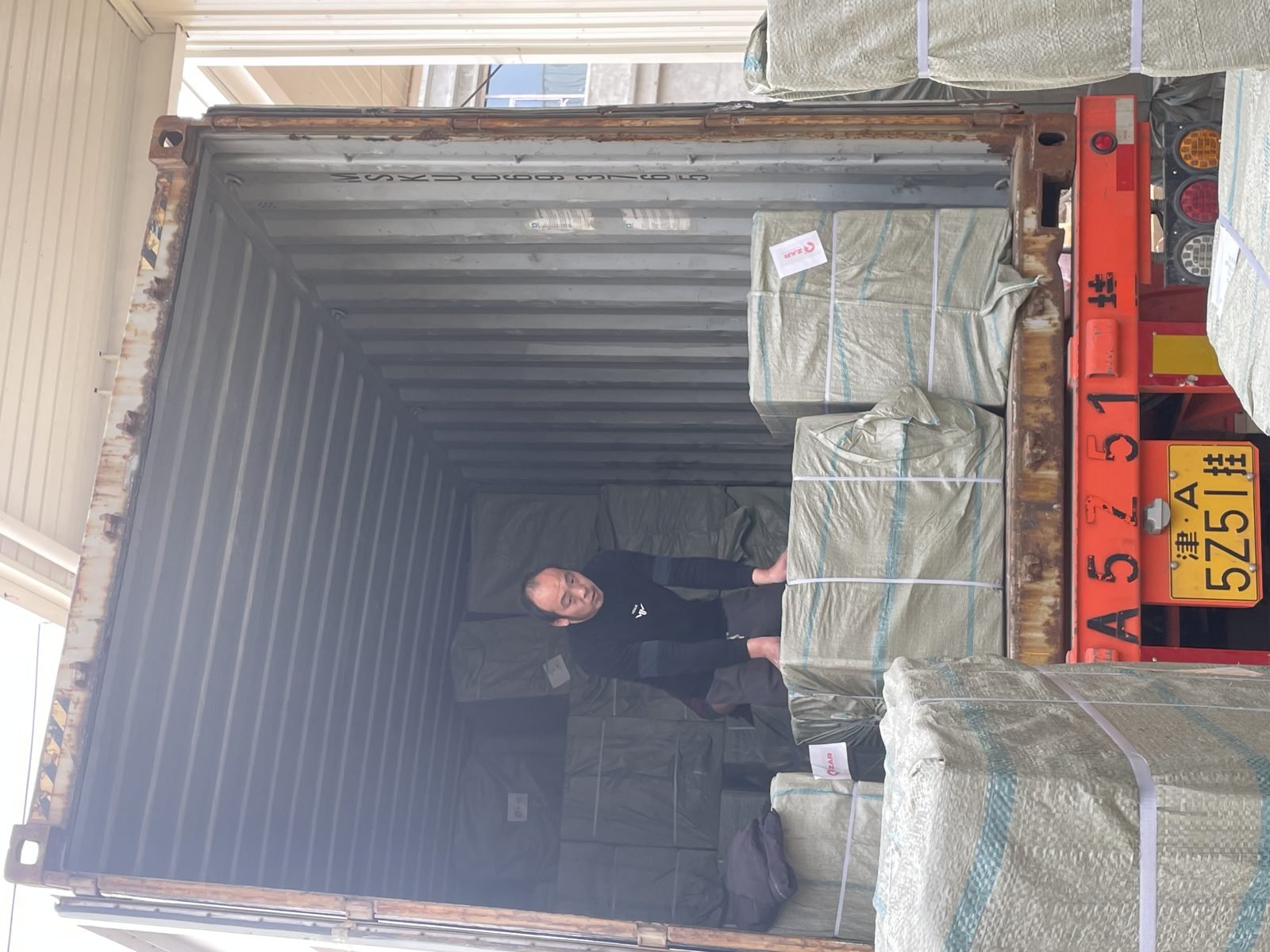
Cartons leave the warehouse stack in the same rows they were counted in, and a crew works the container from the front wall back. Bundles that ship loose in woven-bag wrapping — common for SKD and mixed cargo, where wrapping saves space over individual cartons — are counted bundle by bundle at the tailgate; your scooters travel in printed cartons, ten pieces each.

Notice the blue plastic pallets in the yard: goods move from warehouse stack to container on pallets instead of being hand-carried across the floor in batches. Fewer hand-offs means fewer drops — the same logic as the 60 cm carton drop test in the pre-shipment check.
Mixed containers are the normal order here
A first-time buyer usually does not want 4,600 identical scooters. Because every model in the range packs ten pieces to a carton at 0.139–0.141 CBM, you can split a 40HQ across models and colour-ways without losing pieces:
| Container | Cartons at 0.141 CBM | Cartons at 0.139 CBM | Pieces (10 / carton) |
|---|---|---|---|
| 20GP | ≈ 190 | ≈ 192 | ≈ 1,900 |
| 40GP | ≈ 395 | ≈ 400 | ≈ 3,950 |
| 40HQ | ≈ 460 | ≈ 465 | ≈ 4,600 |
So a launch order of 200 pieces each across five models — say V6333, V6335, V3011, V606 and V1567 — fills roughly 220 cartons and still leaves room to top up with a sixth model. Exact counts per model come on the packing data sheet.
What happens at the top of the load
The last metre is where containers get damaged in transit, so the load is tiered: heavy cartons low, light cartons high, air bags or kraft dunnage filling the gaps near the door. Nothing is stacked above the wall line. The door area is photographed twice — before closing and after sealing.
The evidence pack you receive
- Empty container — inside, with the container number readable.
- Mid-load — carton rows at roughly half height, so the stacking pattern is visible.
- Full load — the closed face before the doors shut.
- Seal — close-up of the seal number, plus the locked doors.
Four sets of photos, taken the day the truck leaves, sent with the shipping documents. When a buyer, a forwarder and a factory argue about a shortage, these are the photos that end the argument — the same principle as photographing carton rows in the warehouse.